
Behind the Curtain: Blog Series
Part 2 of 8Explore the Full 8-Part Series
- Part 1: The Fear of Raising Prices & Farm Sustainability
- Part 2: The Math of Farm Sustainability & Profit (Current Post)
- Part 3: Unpredictable Reality — Weather, Budgets & Cash Flow (Coming Soon)
- Part 4: The Human Cost — Wearing All the Hats (Coming Soon)
- Part 5: Labor, Staffing & Time Off (Coming Soon)
- Part 6: The Mental Load & The Value of a Lesson Horse (Coming Soon)
- Part 7: Hard Choices — Loss, Grief & The Invisible Price Tag (Coming Soon)
- Part 8: Community Support & Why We Keep the Doors Open (Coming Soon)
In businesses built around animals and things we love, making a profit can almost sound like a bad word. People often assume that passion should be its own reward, or that wanting a business to generate more money than it consumes is somehow greedy. But if we want horse farms, lesson programs, and agricultural sanctuaries to still be here five, ten, or twenty years from now, we have to talk honestly about the math behind sustainability.
What Does a 10% Profit Actually Mean on a Farm?
At WildeWood Farm, it takes approximately $516,000 per year just to keep the farm operating. That is the baseline figure required to feed the horses, maintain pastures, pay insurance, keep utilities on, and handle routine maintenance.
That $516,000 baseline is before:
- A reasonable salary for the person running the business 365 days a year
- Building a healthy emergency fund for unexpected crises
- Planning for major facility repairs and equipment replacement
- Preparing for the long-term future of the farm
If we added a reasonable salary and then allowed the business to make a true 10% profit, that profit would not simply disappear into someone’s pocket. In agriculture, profit isn’t luxury – profit is safety.
Profit is What Prepares You for What You Cannot Predict
On a working horse farm, unexpected events are not a possibility; they are a guarantee. A 10% profit cushion is what allows a farm to absorb:
- A bad season: Extended droughts or extreme weather that spike feed and hay prices.
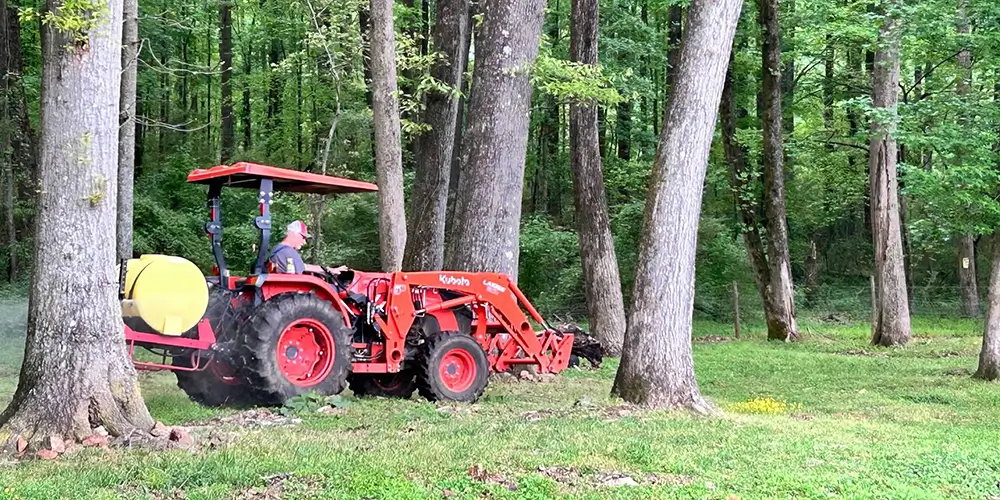
- Major repairs: A tractor that unexpectedly breaks down, a arena fence that needs rebuilding, or a barn roof repair.
- Economic shifts: Sudden inflation in grain, farrier tools, or veterinary supplies.
- Property emergencies: Well pump failures, line repairs, or storm damage.
A horse business that merely breaks even every year is not necessarily healthy. It is simply one emergency away from financial crisis. I don’t believe most people get into the horse business expecting to become rich – I certainly didn’t. But profit isn’t greed. Sometimes, profit is simply the ability to still be here tomorrow.
Myth vs. Reality: Farm Profit and “Free Money”
Because WildeWood Farm has been a staple in Cumming, Georgia for 30 years, I am frequently asked a common question: “But don’t farms get government grants and subsidies to help cover costs?”
There seems to be a widespread belief that because a business has the word farm in its name, there must be a magical government check arriving in the mail every month to help pay the bills. For the vast majority of horse farms, that simply isn’t the reality.
Addressing the 3 Biggest Financial Myths About Horse Farms
Myth 1: Government Grants Pay for Horse Care
While agricultural disaster programs exist for specific commodity crops, livestock losses, drought relief, or timber, there is no ongoing government subsidy that pays a horse farm’s mortgage, fills feed bins, covers routine farrier or veterinary visits, or keeps riding lesson prices artificially low.
Myth 2: Farms Automatically Get Discounted Loans or Low Interest Rates
Many people assume farms receive special low-interest “farm pricing” when borrowing money. In reality, financing an agricultural property or horse business can actually be more difficult. Lenders often view equine operations as higher-risk investments, meaning commercial rates and strict lending criteria apply.
Myth 3: Woman-Owned Farms Receive Automatic Subsidies
Being a certified woman-owned business can open doors to specific educational programs, networking, or specialized contract opportunities, but it does not automatically lower a mortgage payment, discount a commercial loan, or provide free operating grants.
The Bottom Line: Cash Flow Over Good Intentions
At the end of the day, a horse business operates on the exact same economic principles as any other small business. It all comes down to cash flow: money must come in so that bills can go out.
Client fees for riding lessons, day camps, birthday parties, and leadership programs pay for the feed, hay, farrier visits, veterinary care, insurance, property taxes, employee wages, and equipment repairs. If more money goes out than comes in, it doesn’t matter how much you love horses, how beautiful the pastures are, or how many decades you’ve served the community. Eventually, the doors close.
Horse businesses don’t survive on grants, subsidies, or good intentions. They survive on healthy, realistic cash flow. And understanding that reality is the first step toward keeping our farm doors open for the next generation.
— Ms. Hannah
Behind the Curtain: Blog Series
Part 2 of 8Explore the Full 8-Part Series
- Part 1: The Fear of Raising Prices & Farm Sustainability
- Part 2: The Math of Farm Sustainability & Profit (Current Post)
- Part 3: Unpredictable Reality — Weather, Budgets & Cash Flow (Coming Soon)
- Part 4: The Human Cost — Wearing All the Hats (Coming Soon)
- Part 5: Labor, Staffing & Time Off (Coming Soon)
- Part 6: The Mental Load & The Value of a Lesson Horse (Coming Soon)
- Part 7: Hard Choices — Loss, Grief & The Invisible Price Tag (Coming Soon)
- Part 8: Community Support & Why We Keep the Doors Open (Coming Soon)